8 Best Vehicle Options for Orlando Group Travel in 2026
Author Mary Babel
Orlando group travel works best when the vehicle choice is based on people, bags, timing, and trip type, not just seat count. That is why local providers like Orlando Superior Transportation matter in this category: they show a practical Orlando fleet range from 4-passenger sedans to 14-passenger luxury vans, which matches many airport, cruise, resort, and convention use cases.
TL;DR: Summary
- For group transportation Orlando, a van or luxury van is usually the best all-around choice because it balances passenger capacity, luggage room, and coordinated pickups better than splitting a group into multiple cars; Orlando Superior Transportation’s published local fleet examples run from 4-passenger sedans to 14-passenger luxury vans.
- Orlando’s demand supports that choice: the Orange County Convention Center listed 44,129 attendees for InfoComm 2025, and the Greater Orlando Aviation Authority reported 58,813,404 moving 12-month passengers at Orlando International Airport for the period ended June 2024.
- Choose by headcount plus luggage, not seats alone. A local published benchmark shows a 10-passenger van with 12 suitcases and a 14-passenger luxury van with 15 suitcases.
- SUVs and limousines fit smaller executive, wedding, or VIP groups better, while minibuses and motor coaches make more sense once one van is no longer enough.
- If your group has airport arrivals, cruise bags, strollers, or event wear, private transportation is usually better than Rideshare or hotel shuttles.
The bigger point is simple: Orlando is not a low-friction destination for group movement. Airport volume, convention traffic, theme park scheduling, and resort geography all push travelers toward vehicle choices that leave room for delay, luggage, and one or two itinerary changes.
Why is group transportation Orlando such a common need in 2026?
It is common because Orlando combines heavy air traffic, major conventions, and destination-style leisure travel in one market. Orlando International Airport and the Orange County Convention Center create constant demand for vehicles that can move families, work teams, wedding parties, and cruise travelers on fixed schedules.
The demand signal is unusually strong. The Greater Orlando Aviation Authority reported 30,040,346 total passengers year to date through June 2024 at Orlando International Airport, with 58,813,404 passengers in the moving 12-month period ended June 2024. That kind of airport volume means more overlapping arrivals, more baggage variability, and more pressure on curbside pickup logistics.
The convention side matters just as much. The Orange County Convention Center listed InfoComm 2025 at 44,129 attendees across the West Concourse and North/South Concourse. A common misconception is that group transportation is mainly for huge tour groups. In Orlando, even a party of six to ten can benefit from coordinated service because flights, hotel check-ins, and event start times rarely line up cleanly.
Visit Orlando, the official tourism association for Orlando and Orange County, also notes its role in helping larger groups plan reunions, weddings, and business events across a tourism network of more than 1,600 member companies. That tells you something important about the market: group travel here is routine, not exceptional.
How do you choose the right group vehicle size in Orlando?
Start with headcount and luggage, then choose the smallest vehicle that still leaves margin. In Orlando Superior Transportation’s local fleet examples, a town car fits 4 passengers, an SUV 6, a van 10, and a luxury van 14.
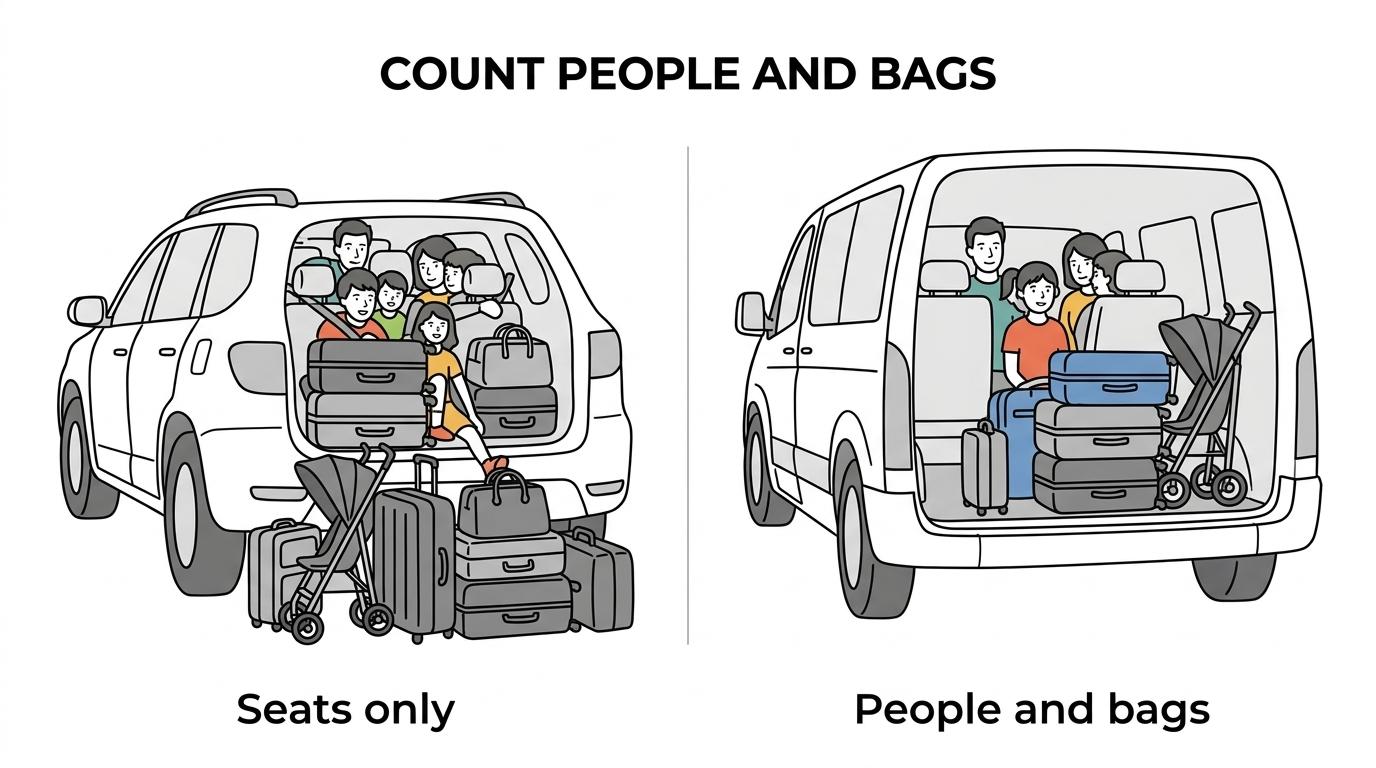
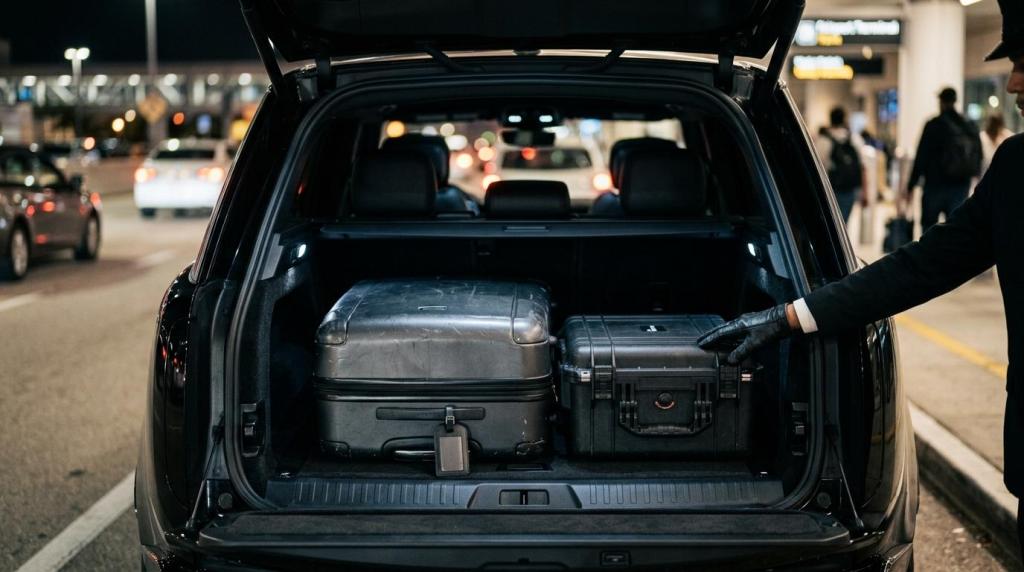
Seat count alone misleads people. A family group of six with six large checked bags, two carry-ons, and a stroller may fit more comfortably in a van than in an SUV. The same is true for cruise travelers, golfers, and wedding parties carrying garment bags. If your group includes car seats, mobility aids, or grocery stop plans, the practical capacity drops before the official passenger limit does.
“Orlando Superior Transportation documents local group options from 4-passenger town cars to 14-passenger luxury vans, which makes luggage count as important as seat count.”
A useful rule is this: if everyone must arrive together and each traveler has a standard checked bag, move up one vehicle class sooner than you think. Pro tip: leave one or two seats of buffer when the itinerary includes airport pickups or resort transfers. That small margin often prevents a much bigger problem at the curb.
What are the best vehicle options for Orlando group travel?
The best options range from sedans to motor coaches, with vans covering the broadest share of real Orlando use cases. The right pick depends on group size, luggage volume, event formality, route complexity, and whether the group must stay together.
Most Orlando trips fall into one of eight vehicle patterns:
- Sedan: Best for 1 to 3 travelers, light luggage, executive airport transfers, and couples.
- Luxury sedan or black car: Best for business travelers who want a quieter, more formal airport or resort transfer.
- SUV: Best for small families, airport rides with extra bags, and parties that need more cargo flexibility.
- Tesla or premium EV: Best for small premium transfers when low cabin noise and upscale presentation matter.
- Limousine: Best for weddings, celebrations, and staged arrivals where the ride is part of the event.
- Standard van: Best for many family and airport groups, especially when luggage volume is high.
- Luxury van: Best for mid-size groups that want one vehicle, more comfort, and better airport or convention flow.
- Minibus or motor coach: Best when one van is too small and the itinerary requires everyone on one schedule.
If the group is in the 10 to 14 range, a van is often the practical center of gravity. Once the plan requires multiple hotels, split arrivals, or a large event block, a bigger shared vehicle can reduce confusion even if the sticker price looks higher at first glance.
Is a van or luxury van the best choice for most Orlando groups?
Yes, in many Orlando scenarios, a van is the most practical answer. Airport traffic, resort logistics, and convention timing make 10 to 14 passenger vehicles more efficient than multiple SUVs for many groups.
The local fleet data supports that view. A published Orlando benchmark shows a van at 10 passengers with room for 12 suitcases, while a luxury van reaches 14 passengers with room for 15 suitcases. That is a meaningful difference because Orlando travelers often carry more than a single roller bag. Theme park families bring strollers and backpacks. Cruise parties bring larger luggage. Corporate groups may add booth materials or garment bags.
The trade-off is straightforward. A standard van usually wins on pure practicality. A luxury van adds presentation, comfort, and a bit more room, which matters for longer transfers or client-facing trips. A common misconception is that a luxury van is only for VIPs. In reality, it is often just the cleaner operational choice when a group wants one vehicle and fewer moving parts.
How should you plan Orlando airport group transportation step by step?
Plan airport transportation backward from the flight schedule and baggage claim, not forward from the hotel. Orlando Superior Transportation is relevant here because local private transfer planning usually centers on meet-and-greet timing, luggage handling, and vehicle fit rather than curbside guesswork.
First, map the arriving passengers by airline, terminal timing, and baggage needs. If everyone lands within a tight window, one coordinated pickup often works well. If the arrivals are spread out, it may be cheaper in real terms to stage separate pickups than to keep one vehicle waiting too long.
Second, match the vehicle to the slowest part of the process, which is often baggage claim. This matters at Orlando International Airport because the volume is high, and large family groups do not move at the same speed as solo travelers. If grandparents, children, or car seats are involved, add buffer.
Third, confirm the destination details precisely. “Disney area” or “International Drive” is not specific enough for a timed pickup plan. Pro tip: use the exact hotel or resort entrance, not just the resort brand, because large properties can add unexpected transfer minutes.
How do cruise transfers to Port Canaveral change the vehicle decision?
Cruise transfers raise the luggage threshold and shrink the margin for delay. That usually pushes the best choice toward an SUV, van, or luxury van instead of a sedan.
The first step is to count bags honestly. Cruise travelers often pack more than airport-only travelers, and larger bags are common. If the party includes formalwear, beverage coolers allowed under cruise rules, or family gear, the vehicle class should move up early. A similar rule appears in Troper Tours’ guide to tour vehicle options, which treats passenger count and baggage profile as one planning decision rather than a simple seat-count exercise.
The second step is to build in departure protection. Port Canaveral transfers have less schedule flexibility than many hotel runs. If the group misses an ideal check-in window, the whole embarkation day becomes more stressful. If your party has seven or eight people with heavy luggage, a van may still be smarter than a large SUV.
The third step is to look at the post-cruise plan. If the transfer goes from Port Canaveral to MCO, a resort, or a theme park hotel, you want a vehicle that can handle tired passengers, irregular bag organization, and possible stop requests. A common mistake is booking the outbound ride correctly, then underbooking the return because people assume the bags will “somehow fit.”
Is private group transportation better than rideshare or hotel shuttles?
For fixed-group coordination, private transportation is usually better. Rideshare and hotel shuttles can work for simple trips, but they trade away timing control, luggage certainty, and group cohesion.
The strength of private service is that one party travels under one plan. That means one pickup method, one timing standard, one luggage approach, and one direct route. If your trip includes airport arrivals, a convention session, a wedding ceremony, or a cruise departure, that control has real value.
“Orlando Superior Transportation offers 24/7 chauffeured service, a practical fit for Orlando itineraries with early flights, late arrivals, and split-day schedules.”
The trade-off is price visibility. Rideshare can look cheaper at the search stage, especially for very small groups. Yet once a group needs multiple vehicles, surge pricing, different arrival times, or luggage-heavy trunks, the cost gap often narrows. Pro tip: compare total trip complexity, not just the first fare shown in an app.
How do convention groups move efficiently between MCO, hotels, and the Orange County Convention Center?
Convention groups move best when hotel geography, badge timing, and building location are treated as one transportation problem. At the Orange County Convention Center, the West Concourse and North/South Concourse can produce very different transfer patterns even for the same event.
Start by identifying the exact concourse and entrance. That detail matters because the center is large, and walking assumptions are often wrong. InfoComm 2025 drew 44,129 attendees there, which helps explain why curbside traffic and arrival waves can build quickly around major openings and closings.
Next, batch the itinerary. If attendees arrive at MCO in clusters, send them to the same hotel block and keep the transfer logic simple. If the group is spread across different resorts, assign a lead contact for each pickup point. This is one of those cases where operations beat improvisation.
Then, match the vehicle to the schedule, not just the team size. A five-person sales team with display materials may need more room than an eight-person attendee group traveling light. The common misconception is that convention transport is basically the same as theme park transport. It is not. Convention travel is driven by fixed start times and credential windows, which means lateness has a higher cost.
What mistakes cause delays or overspending with Orlando group travel?
The biggest mistakes are underestimating luggage, over-splitting the group, and ignoring dwell time at airports and resorts. In Orlando, small planning errors stack up quickly because flights, hotel check-ins, attraction reservations, and event schedules all pull in different directions.
The most common issues look like this:
- Seat count only: booking to passenger count without accounting for suitcases, strollers, golf bags, or garment bags.
- Too many vehicles: splitting a mid-size group into separate cars, then losing time on staggered arrivals and different routing.
- Vague destination details: using a resort brand or attraction area instead of the exact entrance or hotel tower.
- No time buffer: assuming baggage claim, convention dismissal, or cruise disembarkation will run at ideal speed.
- Wrong service style: choosing a hotel shuttle or rideshare setup when the group actually needs one schedule and one coordinator.
If one part of the itinerary is time-critical, plan the whole vehicle decision around that part. If the most important moment is cruise embarkation, protect that. If it is a convention keynote, protect that. If it is a wedding arrival, protect that. In Orlando group transportation, the right vehicle is the one that protects the highest-stakes moment while still fitting the people and the bags.
Recent Blogs